


“Build it and they will come” – that’s the saying isn’t it?
You’ve done the hard work and built an audience.
Your social media accounts may have a few hundred or even several thousand followers. You’re getting great engagement in the form of likes and views. Perhaps even comments like ‘this is so helpful’ or ‘I’ll’ definitely give this a try.’
But when you look at your sales, it’s a different story. They’re sporadic, or don’t even come from social media. They come from a referral here and there.
Your social media accounts give you a dopamine hit, but your bank account hits you in the gut and panic sets in.
It’s not your fault.
There is so much noise out there telling small business owners that they just need to build an audience and the sales will follow and that’s simply not true.
What you’ve built is awareness, attention, perhaps created interest, but this doesn’t always convert to a sale.
In this blog we’ll talk through the reasons why and how to fix it.
Why your audience is growing but your income stays flat
It is regularly misunderstood that the bigger the audience, the higher the sales.
But audience size doesn’t always indicate buying intent. You have to take some time to understand your audience and why they are there.
According to Shopify, a social media conversion rate above 3% is generally considered a success. But of course, this can vary for many reasons such as platform, industry, etc.
Audiences can usually be split into those with information, research, even entertainment intent and those intending to buy, with the latter being a much smaller proportion and that proportion can reduce again when you consider immediate buying intent.
Let me explain with an analogy from my shopping centre days…
When I used to lead the marketing team at Eldon Square, a shopping destination in Newcastle, at its peak, the footfall was 36 million, but only around 65% of them converted into buying customers at the stores and restaurants. Some may have been just browsing and doing research, some may have just been passing through on their way to somewhere else, such as the bus station or other parts of the city. Heck on a rainy day, they may even have just been hiding from the rain!
But that was part of the marketing challenge, to try and convert passing trade. Whilst they may have been in the centre for another reason than to shop, while we had them, it was the marketing team’s job to capture their attention and drive action ideally in the form of a retailer sale.
How can you start to recognise your audience’s intentions or reasons for inaction
If you’re getting likes, but no leads, there could be a number of reasons for this:
- You’re putting out mainly educational content
This was a big trend a year or two ago, but the problem with educational content is that it usually encourages a ‘do it yourself’ solution. You may be building trust and showing that you know your stuff, but you also risk teaching your audience to solve the problem without you. Offering a free solution will certainly get you likes, but not any leads.
- You’re not creating any sales moments
This is very common particularly in small businesses, where founders running their own marketing may also be new to actually selling. Or perhaps even fear selling! It’s key to lead your audience and show them what to do next if they are interested in working with you or buying your products and people want to be led. Your audience doesn’t want to waste time looking around your profile or website for ways to buy from you, they want your offers served up on a silver platter so they can make a choice.
- Your content attracts interest, but not urgency
Attracting attention in today’s noisy world isn’t easy, so don’t let your hard work go to waste. You need to give your audience a reason to take action, rather than mindlessly scrolling on to the next thing. If your audience doesn’t feel anything when consuming your content and it isn’t action oriented, chances are you’ll lose them.
So how can you overcome these common pitfalls?
Stop playing the ‘hero’ and start playing ‘the guide’.
You’ve attracted the attention, you’re getting the love, likes and engagement, perhaps feeling admired because you’ve attracted such a big audience – you feel like a hero!
But in the story of your business, you and your brand are not the hero.
The hero has to be your customer and you play the role of the guide.
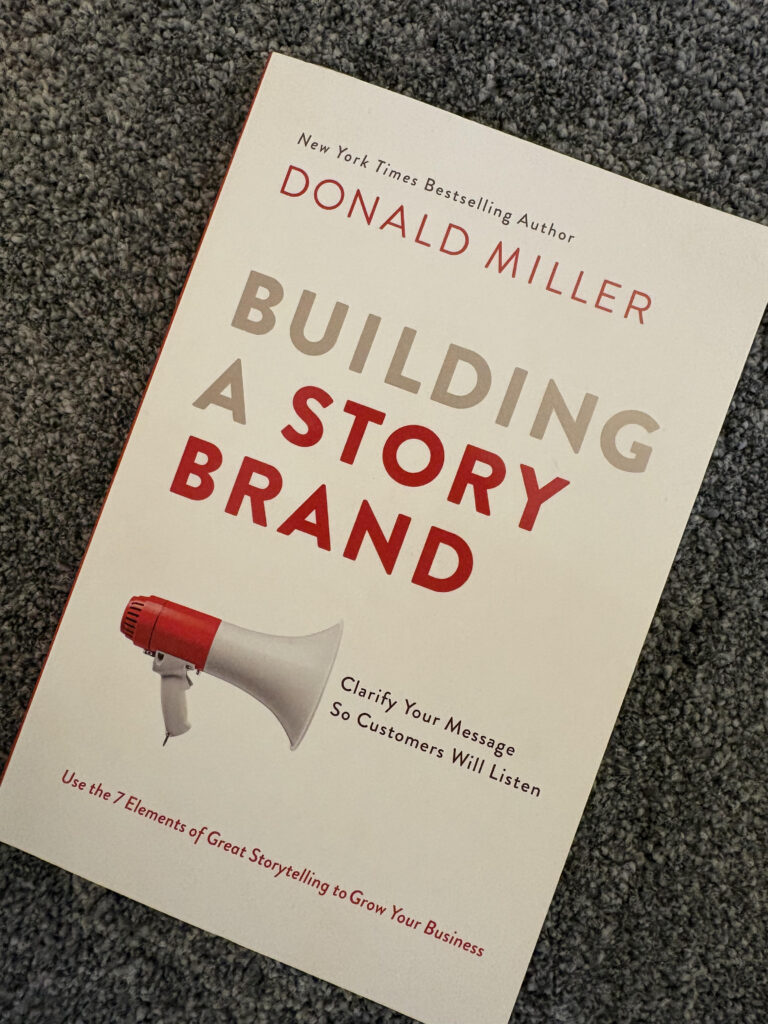
There is a great book which explains this called ‘Building a Story Brand’ by Donald Miller.
In this book he demonstrates that “when you put your customer as the hero and yourself as the guide, your customers start to recognise you as the trusted resource to help them overcome their challenges.”
He goes on to explain that if heroes could solve their own challenges they’d never get into trouble in the first place. Every movie you’ve ever watched probably has a guide character.
Let me give you an example with a film I watched recently with my kids, Pinocchio. In that film, Pinocchio is the hero going on a journey to overcome his flaws, but he has a guide – Jiminy Cricket, who acts as his conscience, leading him to a life of being brave, truthful and unselfish.
Everyone loves Jiminy, you trust him, he’s authentic and has Pinocchio’s best interests at heart.
In your business you need to be more Jiminy!
Some examples of brands positioning themselves as the guide include:
- Nike
Nike positioned themselves as the coach, with their ‘Just Do It’ slogan, inspiring their customers to move, reach their goals and take action to achieve their own personal best.
- Pampers
Pampers, the nappies brand takes a care giving guide role, putting parents and their babies in the starring role and supporting them on their journey of child development.
- Sage
Sage guides business owners through the complexities of many business situations and tasks through its products and services.
By placing your customer as the hero, you shine a spotlight on them and support them to win. This approach helps you to reduce self-promotion and start story-telling in a way that can drive a deeper connection with your audience.
When you position your customer in this way, you can then start to see ways in which you can lead and move them forward to take action.
Steps you can take to start converting your existing audience
In summary, here are a few practical steps you can take to review your audience and guide them to take action.
- Conduct an audit of your audience
There are lots of analytical tools you can use for this, even within the platforms you are using. But you can also review your audience by checking through the comments, what’s being said in DM’s and look for any trends, or patterns and make a note of what stands out to you.
- Review your content
Take a look at the types of content you are putting out there. Is it varied? Are you consistent? Does it make you feel anything or are you just being educated? Have you weaved in sales messaging or asked your audience to take action in any way, such as sign up to your emails?
- Evaluate your processes and systems
Do you have a process to move your audience through to make a sale? If yes, great, now you can review the steps and see if there are any things you may need to fix. You could even ask your customers how they found the journey to purchase.
If you don’t have any systems in place, then you can start to look at how you can introduce them and start to create a clear path for your audience to buy.
Running a small business can sometimes feel like you’re on a hamster wheel and the constant need to put out content into the world in its many forms can add to that feeling. Hopefully the insights and small actionable steps in this blog will enable you to still provide content that your audience loves, but done in a way that won’t leave you feeling burnt out and gives you that fuzzy feeling inside when you see your bank balance!
Found this blog useful? Why not sign up to our email newsletter and receive the latest marketing news and tips.


Thinking of the customer as the hero is such a great way to frame things. This really helps me switch my thinking around and focus on them and their situation and how I can help.
Love this!